Friday, December 13, 2013

Christmas Trivia - Saturnalia

Saturnalia was an ancient Roman festival in honour of the deity Saturn held on December 17 of the Julian Calendar and later expanded with festivities through December 23. The holiday was celebrated with a sacrifice at the Temple of Saturn in the Roman Forum and a public banquet, followed by private gift-giving, continual partying, and a carnival atmosphere that overturned Roman social norms - gambling was permitted, and masters provided table service for their slaves. The poet Catullus called it "the best of days."
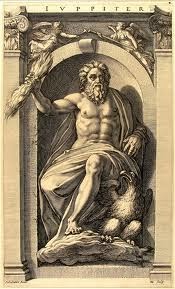

In Roman mythology, Saturn was an agricultural deity who reigned over the world in the Golden Age, when humans enjoyed the spontaneous bounty of the earth without labor in a state of social egalitarianism. The revelries of Saturnalia were supposed to reflect the conditions of the lost mythical age, not all of them desirable. The Greek equivalent was the Kronia.
Although probably the best-known Roman holiday, Saturnalia as a whole is not described from beginning to end in any single ancient source. Modern understanding of the festival is pieced together from several accounts dealing with various aspects. The Saturnalia was the dramatic setting of the multivolume work of that name by Macrobius, a Latin writer from late antiquity who is the major source for the holiday. In one of the interpretations in Macrobius's work, Saturnalia is a festival of light leading to the winter solstice, with the abundant presence of candles symbolizing the quest for knowledge and truth. The renewal of light and the coming of the new year was celebrated in the later Roman Empire at the Dies Natalis of SOl Invictus, the "Birthday of the Unconquerable Sun," on December 25.


The popularity of Saturnalia continued into the 3rd and 4th centuries AD, and as the  Roan Empire came under Christian rule, some of its customs may have influenced the seasonal celebrations surrounding Christmas and the New Year.

Thursday, December 12, 2013

Strangest Christmas Tradition ever - Christmas Trivia

This fairly new "tradition" comes from Catalonia...............................Glory me ...what next?

This tradition is a much-loved element of the Christmas celebration in Catalonia, despite its somewhat obscure beginnings.
·


A caganer -- or "pooper" -- is a small figurine of a person squatting down with lowered pants (or raised skirt) to answer nature's call. They have been around since the 17th century and can often be found hiding in an obscure corner of a Nativity scene.
Some say that the figurines originally became popular among farmers who believed -- quite practically -- that the caganer's "offerings" would make the soil rich and productive for the coming year. 

In somewhat vaguer terms, the Web site for the Association of Friends of the Caganer -- an organization founded in 1990 to celebrate the caganer tradition and which boasts 60 members spread across the world -- states that the figures were meant to add "a human side to the representation of the mystery of Christmas."

The Wikipedia entry mentions how the caganer might represent "the equality of all people" because "everyone defecates" or it may be meant to reinforce that "the infant Jesus is God in human form." (Hence the Pope figurine I guess...)


Young children in Catalonia still play a Where's-Waldo-like game that involves searching for the caganer in the Nativity scene arrangement. According to the Friends Web site, the caganer is "placed under a bridge, behind a haystack or otherwise discretely hidden" as it "would show a lack of respect" to have him near the arrangement's manger scene.
The original el caganer is a wooden or clay figure of a peasant wearing the traditional floppy red Catalan cap with a black band (barretina) and smoking a cigarette or a pipe. But the figure's popularity has led to a massive expansion in the range of defecating figurines.


Relaxative Holiday Mirth

The other scatological element of the traditional Catalan Christmas is the Tió de Nadal, which roughly translates as "Christmas log." Also known as the Caga Tió, or "pooping log," this character is a 30-centimeter (one-foot) log hallowed out on one end. In recent times, the other end of the log has been given a smiling face, topped with a miniature version of the barretina and propped up on two stick legs.

Starting on Dec. 8, which marks the Feast of the Immaculate Conception holiday in the Catholic tradition, the log is "fed" small amounts of candies, nuts, figs or torrons -- a local type of nougat -- every night and sleeps under a little blanket. On Christmas Eve or Christmas day, depending on the household, one end of the log is put in the fireplace and ordered to "poop."

To hasten and encourage the log's symbolic bowel movement, children sing special songs and beat it with sticks, yelling "caga tió!" Someone then reaches around the log and under the blanket to bring forth a gift that is then shared by the group.

Of course, if the revelers are still hungry, then can always go to their local pastry shops, which have sweets shaped like feces on offer during the holiday season.

And you thought Uncle Bert was embarrassing at Christmas - imagine what he would say and do with this tradition in the offing??????

Until tomorrow

Angela


Wednesday, December 11, 2013

Christmas Trivia - Holly

When we were in the UK it was amazing to see these growing.  Such a beautiful shrub - and the leaves are glossy and shiny....


In Northern Europe Christmas occurred during the middle of winter, when ghosts and demons could be heard howling in the winter winds. Boughs of holly, believed to have magical powers since they remained green through the harsh winter, were often placed over the doors of homes to drive evil away. 

Greenery was also brought indoors to freshen the air and brighten the mood during the long, dreary winter.

Legend also has it that holly sprang from the footsteps of Christ as he walked the earth. The pointed leaves were said to represent the crown of thorns Christ wore while on the cross and the red berries symbolized the blood he shed.

Until tomorrow

Angela

Tuesday, December 10, 2013

Christmas Trivia - The Jesse Tree


This is a popular Advent tradition ( well if you are catholic/christian although I believe in some Jewish sects there is also a similar thing for hannukah). A jesse tree named after the father of David is a tree that is decorated gradually throughout Advent with symbols or pictures of biblical persons associated with the coming of Jesus. This includes among others Noah, Abraham, Moses, Joseph and Mary. The creation of a Jesse Tree serves as a reminder of the preparatory nature of the Advent season.

Monday, December 9, 2013

Christmas Trivia: The Christmas Tree

Whether you are into fibre optic ultra modern styles, the smell-fantastic-drop-needles-everywhere-for-two-weeks live ones, or an interesting collection of twigs - there would be a Christmas tree in almost every home......


16th-century Germany fir trees were decorated, both indoors and out, with apples, roses, gilded candies, and colored paper. In the Middle Ages, a popular religous play depicted the story of Adam and Eve's expulsion from the Garden of Eden.

A fir tree hung with apples was used to symbolize the Garden of Eden -- the Paradise Tree. The play ended with the prophecy of a saviour coming, and so was often performed during the Advent season.

It is held that Protestant reformer Martin Luther first adorned trees with light. While coming home one December evening, the beauty of the stars shining through the branches of a fir inspired him to recreate the effect by placing candles on the branches of a small fir tree inside his home

The Christmas Tree was brought to England by Queen Victoria's husband, Prince Albert from his native Germany. The famous Illustrated News etching in 1848, featuring the Royal Family of Victoria, Albert and their children gathered around a Christmas tree in Windsor Castle, popularized the tree throughout Victorian England. Brought to America by the Pennsylvania Germans, the Christmas tree became by the late 19th century.


Our Christmas tradition is to buy each child a decoration every year (and after many arguments with my siblings over the years I write them down in a book each year - which in itself becomes  record of Christmas - when the older boys moved out they took their with them for their tree - I also buy one for the family - so there are still some left on our tree !! This year we get to buy one for our Granddaughter Harper and continue the tradition my mother started.


Until tomorrow

Angela

Sunday, December 8, 2013

Christmas Trivia: The Christmas Card


A form of Christmas card began in England first when young boys practiced their writing skills by creating Christmas greetings for their parents, but it is Sir Henry Cole who is credited with creating the first real Christmas card. The first director of London's Victoria and Albert Museum, Sir Henry found himself too busy in the Christmas season of 1843 to compose individual Christmas greetings for his friends.

He commissioned artist John Calcott Horsley for the illustration. The card featured three panels, with the center panel depicting a family enjoying Christmas festivities and the card was inscribed with the message "A Merry Christmas and a Happy New Year to You"


So in this world of technology is the Christmas Card dead?  I love to receive a handwritten note from a friend or a client, I think it brings us all a little closer.  To think that in this world where communication really is as simple as the tapping of a few keys that someone takes the extra moments to write something and mail it - well there is something very special about that.

Until tomorrow

Angela

Saturday, December 7, 2013

Christmas Trivia: Candy Canes

UGH Candy Canes - this is one part of Christmas I could live without - the kids pockets are full of these sticky sweet things - they end up stuck to everything.  But perhaps my friend Julie has a good solution........


 Candy Cane Biscuits fresh from the oven of my friend Julie

It was not long after Europeans began using Christmas trees that special decorations were used to adorn them. Food items, such as candies and cookies, were used predominately and straight white candy sticks were one of the confections used as ornamentation. Legend has it that during the 17th century, craftsmen created the white sticks of candy in the shape of shephreds' crooks at the suggestion of the choirmaster at the Cologne Cathedral in Germany.
The candy treats were given to children to keep them quiet during ceremonies at the living creche, or Nativity scene, and the custom of passing out the candy crooks at such ceremonies soon spread throughout Europe.
According to the National Confectioner's Association, in 1847 German immigrant August Imgard used the candy cane to decorate a Christmas tree in Wooster, Ohio. More than 50 years later, Bob McCormack of Albany, Georgia supposedly made candy canes as treats for family, friends and local shopkeepers. McCormack's brother-in-law, Catholic priest Gregory Keller, invented a machine in the 1950s that automated the production of candy canes, thus eliminating the usual laborious process of creating the treats and the popularity of the candy cane grew.More recent explanations of the candy cane's symbolism hold that the color white represents Christ's purity, the red the blood he shed, and the presence of three red stripes the Holy Trinity. While factual evidence for these notions does not exist, they have become increasingly common and at times are even represented as fact. Regardless, the candy cane remains a favorite holiday treat and decoration.